


My fence is inside my property boundary – can I move it?


Found out your fence is 10, 20 or even 50 cm inside your property?
Don't move it yet.
An existing fence and the legal property boundary are not always in exactly the same place — particularly with older fences. But discovering a gap doesn't automatically mean you should pull the fence down and rebuild it on the line you believe is correct.
The short answer: first establish the actual property boundary. Then work out where the new dividing fence should be positioned and resolve that with your neighbour. Once the fence line is established, you can get the physical fencing work quoted and built.
Here's how it works in NSW.
Why would a fence be inside my property?
It happens.
An old fence may have been built slightly away from the boundary years ago. Previous owners may have agreed on its position. There may have been a tree, retaining wall, concrete, a building or another obstacle in the way.
Sometimes nobody knows why.
And often nobody notices until the fence needs replacing or a survey is completed.
For example:
property boundary → 200 mm gap → existing fence
If that continues for 20 or 30 metres, it's understandable to look at it and think:
“Why is part of my property on the other side of the fence?”
That's when it's worth investigating properly.
Can I just move the fence to the property boundary?
Not straight away.
Before moving a dividing fence, you need to know where the actual property boundary is.
Don't measure from the house.
Don't assume the old fence is correct.
And don't rely only on your neighbour saying:
“It's been there for 30 years, so that's the boundary.”
If the exact boundary matters, it may need to be established by a registered surveyor.
A useful way to think about it is:
Surveyor → establishes the property boundary
Property owners → resolve the proposed fencing work and fence position
Best Fence → quotes and builds the fence
Keeping those three jobs separate can prevent a relatively simple fence replacement from turning into a much bigger problem.
If the fence is inside my boundary, is that land still mine?
This is usually the question people really want answered.
If a survey shows that the existing fence is inside your property boundary, don't automatically assume that simply moving the fence will “give the land back”.
The legal boundary and the physical position of a fence are related, but they are not necessarily the whole story if there is a dispute about ownership or occupation of the land.
If your neighbour disputes the boundary or claims rights over the area between the fence and the surveyed boundary, the issue may require surveying or legal advice before the fence is moved.
But if the boundary and proposed new fence position are established and there is no unresolved dispute, you can then move on to the practical question:
What will it take to put the new fence in the right place?
That's where a fencing contractor comes in.
What if my neighbour says the old fence has to stay where it is?
Don't turn it into an argument about whose measurements are right.
If both owners agree about where the replacement fence should go, the process can be relatively simple.
If you don't agree about the common boundary, NSW law provides a process for dealing with boundary uncertainty in connection with dividing-fence work. This can include a Boundary Notice and, where required, determination of the boundary by a registered surveyor.
The important point is simple:
Don't spend thousands of dollars building the new fence until the location issue has been resolved.
What if we know the boundary but my neighbour still doesn't agree to the new fence?
That's a different problem.
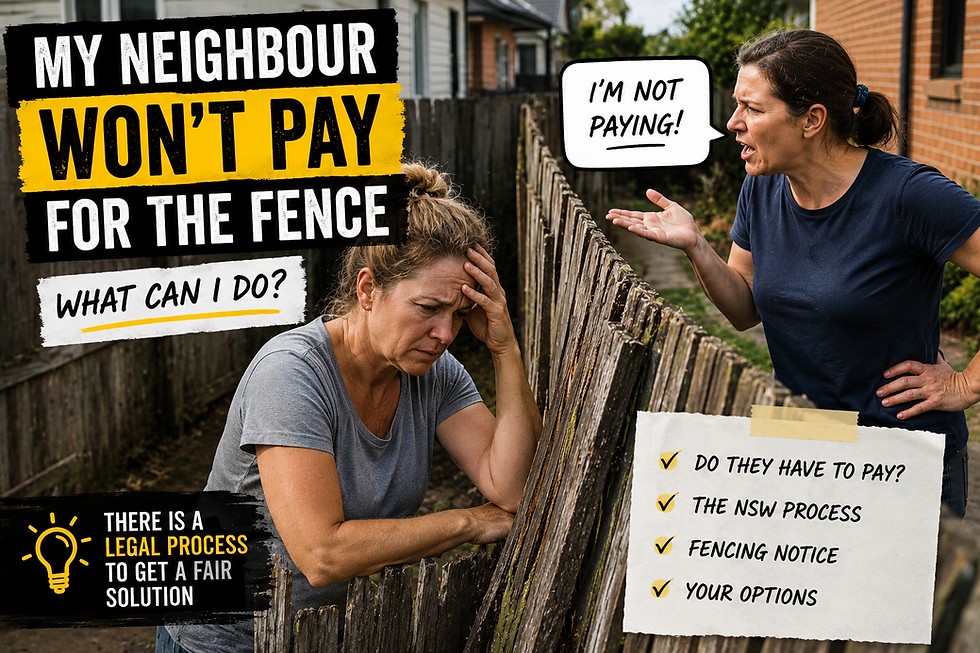
If the boundary itself is known but you cannot agree about the dividing-fence work, NSW has a process under the Dividing Fences Act 1991.
A Fencing Notice can formally set out the proposed work, including the proposed fence location, type of fence, estimated cost and proposed contributions.
If agreement still cannot be reached, a dividing-fence dispute may potentially be dealt with through the Local Court or NCAT.
You don't necessarily have to abandon the project simply because your neighbour says no.
Who pays for the new boundary fence?
Generally, adjoining owners in NSW may be required to contribute to the cost of fencing work necessary to provide a sufficient dividing fence, subject to the particular circumstances and exceptions under NSW law.
If one owner wants something above that standard, they may be responsible for the additional cost.
This is where getting a proper written fencing quote becomes useful.
Instead of discussing an approximate figure with your neighbour, you have a clear description of the proposed work and its cost.
Do I need a survey before asking Best Fence for a quote?
Not always.
If you're replacing an existing fence along a line that both owners accept, you can ask Best Fence to inspect and quote the work normally.
But consider this example:
Your survey shows the boundary 200 mm beyond the old fence.
You want the new fence moved across by 200 mm.
Your neighbour agrees with the surveyed boundary and proposed fence position.
Great — you're now at the stage where Best Fence can assess the actual fencing work.
If your neighbour disputes that position, resolve the boundary or fencing issue first.
Best Fence should not decide who owns those 200 mm. That's not the fencing contractor's job.
What does moving the fence actually involve?
Sometimes moving a fence 100 or 200 mm is straightforward.
Sometimes it isn't.
The new line may run into old concrete, different ground levels, trees, retaining structures, existing footings, gates or other structures.
Best Fence can inspect the site and assess things such as:
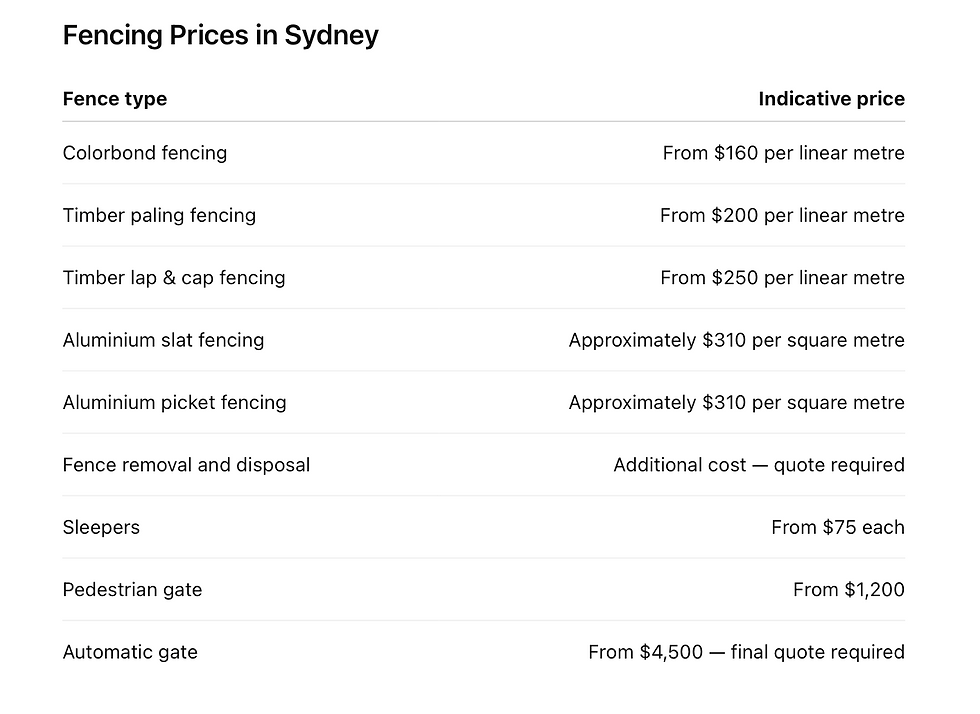
removal and disposal of the existing fence;
the new fence alignment;
new posts and concrete footings;
concrete cutting;
sleepers or retaining requirements;
gates and access;
trees and vegetation; and
obstacles along the new fence line.
That's why it's useful to have the position sorted out before getting the final fencing quote.
So what should I do?
If you think your fence is in the wrong place, keep the process simple:
1. Check Find out whether there really is a difference between the existing fence and your property boundary.
2. Establish If the boundary is uncertain or disputed, have it properly established.
3. Resolve Work out the proposed position of the new dividing fence with your neighbour. If you cannot agree, NSW has formal processes available.
4. Quote Once you know where the fence can be built, get a written quote for the actual fencing work.
5. BuildRemove, replace or realign the fence along the established line.
Think your fence might be in the wrong place?
If you've discovered that your existing fence is inside your property boundary and you're considering replacing or realigning it, Best Fence can help with the practical fencing work.
Once the appropriate fence line has been established, we can inspect the site, identify any installation issues and provide a clear written quote for removing and replacing the existing fence.
Need to move or replace an existing boundary fence in Sydney? Request a quote from Best Fence!
This article provides general information about fencing and property boundaries in NSW. It is not legal or surveying advice.

Comments